Monday, December 26, 2005

Compatibility By Birthday


... XmasPost ...
10) Pet Sematary and its
Schrödinger's cat
There's a cat for 70 years no one knows if he is dead, if alive, or if it is a bit 'dead and some 'alive.
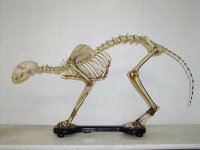
E 'the cat of Erwin Schrödinger, the physicist who devised an experiment in '35 to show the conceptual difficulties of quantum physics.
The cat is in a room where there is a vial with a poison. The vial is opened only after the decay of a radioactive material which has a 50% chance of decaying within a certain time. The problem is that physics quantum probabilities do not interpret this as a prediction about the future, but as if the atom could be found simultaneously in the two possible states: decayed and not. These two states, however, are antithetical to the scientist and always appear one at a time. The orthodox theory says that the atom experiences the overlap of the two states. When the scientist goes to check, the atom would move instantaneously in one of two possible scenarios, 'deciding' whether or not decay.
If the argument were true, then the cat would be a bit 'dead and a little' alive, and his fate would decide when the scientist looks into the room. If you can accept that an atom can be both a bit 'decayed and a little 'no, the reasoning for a cat may look a bit' more difficult ...

Compatibility By Birthday


... XmasPost ...
10) Pet Sematary and its
Schrödinger's cat
There's a cat for 70 years no one knows if he is dead, if alive, or if it is a bit 'dead and some 'alive.
E 'the cat of Erwin Schrödinger, the physicist who devised an experiment in '35 to show the conceptual difficulties of quantum physics.
The cat is in a room where there is a vial with a poison. The vial is opened only after the decay of a radioactive material which has a 50% chance of decaying within a certain time. The problem is that physics quantum probabilities do not interpret this as a prediction about the future, but as if the atom could be found simultaneously in the two possible states: decayed and not. These two states, however, are antithetical to the scientist and always appear one at a time. The orthodox theory says that the atom experiences the overlap of the two states. When the scientist goes to check, the atom would move instantaneously in one of two possible scenarios, 'deciding' whether or not decay.
If the argument were true, then the cat would be a bit 'dead and a little' alive, and his fate would decide when the scientist looks into the room. If you can accept that an atom can be both a bit 'decayed and a little 'no, the reasoning for a cat may look a bit' more difficult ...

Tuesday, December 20, 2005

Blue Jean Sports Jacket


9) Butchers, gems and Minoan vases Theban

not break the bones of the dead

All you have doubtless heard of the goddess Artemis, the "animal lady", but perhaps you know there is a incuriosirà etymological link between Artemis (in Doric Artamis ) and artamos "the butcher " or more precisely, "one who cuts off the joints."
The term, less common than its synonym magheiros, was used both in the language of the kitchen and in that of sacrifice. The name of Artemis Serbia a trace of the ban, issued within the Eurasian (you see it emerge in the Old Testament) to break the bones of sacrificial victims. Such a prohibition may have been associated with Despoina (or Mrs.), the most venerated of all the goddesses of Arcadia, in some ways similar to Artemis, though belatedly treated as Kore, the daughter of Demeter. According to Pausanias, the sacrifices in honor of Despoina followed a ritual at all unusual. The victim's throat was cut: the cut were the members "at random", ie without a predetermined order, while respecting the joints. In this kind of sacrifice have been matched some gems Minoan and archaic amphora Theban, which depicts a female deity surrounded by severed limbs of animals. Maybe the deities that the Eurasian resuscitate animals collected from the bones are not far from this image. In any case, the theme of resurrection from the bones was also present in Greek culture: if you like good, we'll tell you later the myth of Pelops.